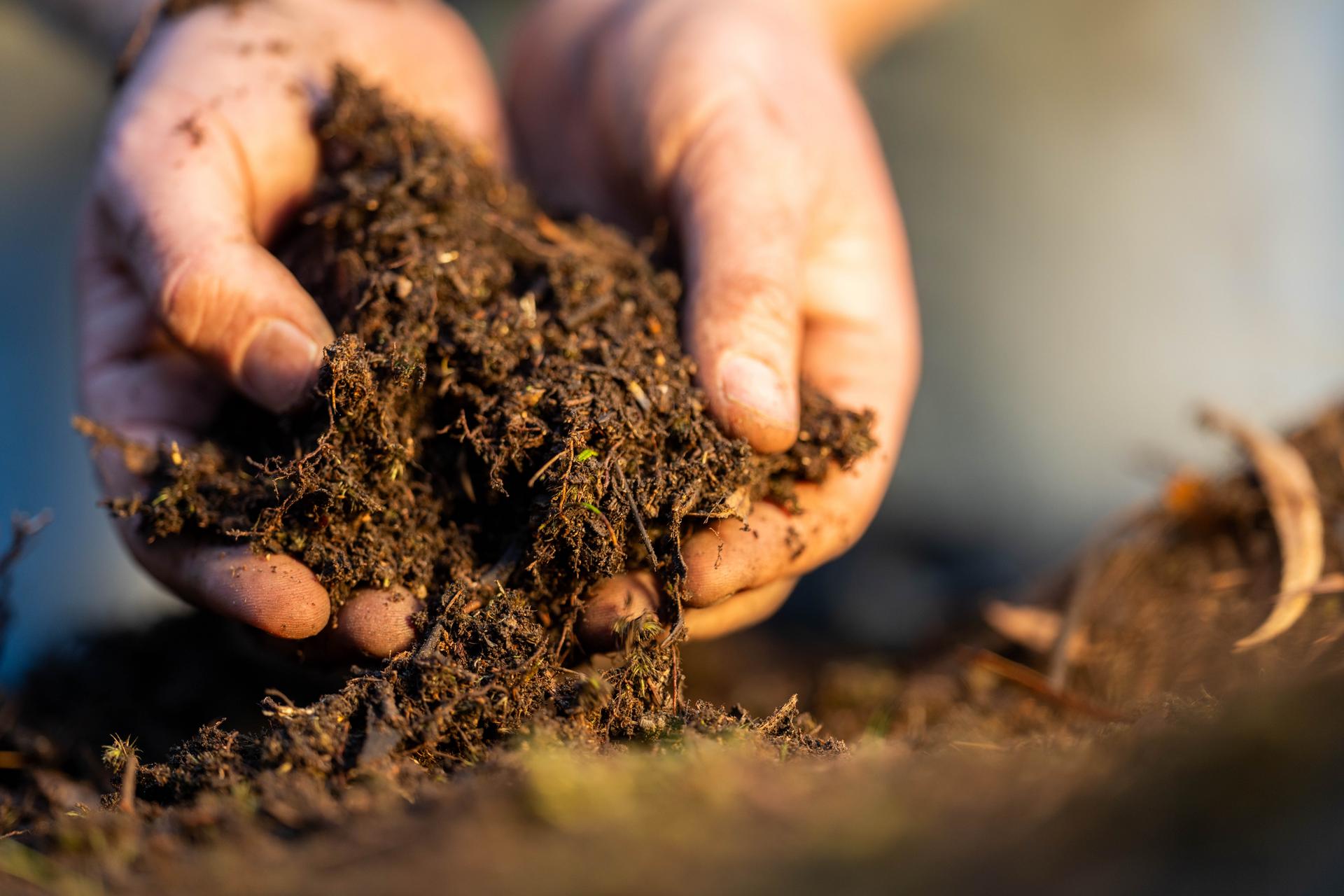
Leading Thought
To deliver on the EU Soil Strategy 2030 under new geopolitical realities, Europe must move beyond fragmented expertise, beyond compliance thinking, and beyond a narrow protection paradigm.
Soil is no longer just a resource to be protected – it is a strategic foundation for Europe’s food sovereignty, economic resilience, and climate security.
The Vienna Soil Dialog brings together leading actors from science, policy, and practice to align soil stewardship with Europe’s core strategic interests.
Why Now?
The EU Soil Strategy 2030, shaped before the war in Ukraine, did not anticipate today’s era of geo-economic instability, input dependency, and strategic resource scarcity.
Soil health is now directly linked to farmer income, fertilizer independence, supply chain resilience, and climate adaptation – all under growing pressure.
The window to shape national implementation is open but closing fast; without coordination across metrics, incentives, data, and governance, Europe risks falling short.
This dialogue aims not just to share insights but to catalyze coordinated action, positioning soil as critical infrastructure for Europe’s survival and strength.
Leading Question
In light of rising geo-economic risks, how can we ensure resilient, healthy soils – while safeguarding farmers’ incomes, stabilizing Europe’s agricultural raw material base, and strengthening climate adaptation?
Mission Statement
The Vienna Soil Dialog positions soil as strategic infrastructure – the living foundation of Europe’s food system, economic autonomy, and climate resilience.
By connecting science, policy, and practice, the conference seeks to accelerate the implementation of the Soil Strategy 2030 and establish soil health as a unifying force for Europe’s sovereignty and sustainability.
Program / Agenda
| VENUE | Raiffeisen Haus, Obere Donaustraße 91, 1020 Vienna, Austria |
|
|
PROGRAM ITEM |
|
08:30-09:00 |
Arrival & Registration |
|
09:00-09:05 |
Opening & Framing Remarks – Mag. Stephan Büttner (AGRANA) |
| 09:05-09:15 | Conference Overview & Framing - Harald Katzmair (FAS Research) |
|
09:15-10:30 |
Panel 1 - Healthy Soil: What Makes Soil Resilient? |
| 10:30-10:45 | Coffee Break |
|
10:45-12:00 |
Panel 2 – Policy & Incentives: What Makes Soil Stewardship Economically Viable? |
|
12:00-13:00 |
Lunch & Networking |
|
13:00-14:15 |
Panel 3 - Innovation & Metrics - What Works on The Ground And How Do We Measure it? |
|
14:15-14:30 |
Coffee Break |
|
14:30-15:30 |
Panel 4 - Narrative Shift: How Do We Frame Soil as Strategic/Soul Infrastructure? |
|
15:30-15:45 |
Closing Bridge: From Soil To Systems - Harald Katzmair (FAS Research) |
|
16:00-18:00 |
LIVE SITUATION ROOM – "Connecting the Dots" – Moderated by Valerie de Icco-Streibel und Paul Poledna |
|
18:00 |
Conference End |
Speaker
Brian D. Fath
Principal Research Scholar, IIASA
Brian D. Fath is a professor in the Department of Biological Sciences at Towson University, Maryland, USA and a Principal Research Scholar at the International Institute for Applied Systems Analysis (IIASA) in Laxenburg, Austria. He has published over 200 research papers and held Fulbright Distinguished Chair positions at Parthenope University of Naples, Italy (2012) and Masaryk University in Brno, Czech Republic (2019). Fath was also the 2016 recipient of the Prigogine Medal for outstanding work in systems ecology.
Panel 1:
Healthy Soil – What Makes Soil Resilient?
Martin H. Gerzabek
President of the Christian Doppler Research Association
Professor of Environmental Toxicology and Isotope Application at the Institute of Soil Research, BOKU University Vienna; from 2009-2018 Rector of BOKU; now President of the Christian Doppler Research Association and a full member of the Austrian Academy of Sciences, acatech and Academia Europaea, member of the University Council of TU Vienna. ~ 550 publications on soil development and functions, soil protection, plant nutrition, remediation of contaminated sites, radioecology
Panel 1:
Healthy Soil – What Makes Soil Resilient?
Andrea Spanischberger
Austrian Federal Ministry (BMLUK) - Soil & Plant Production Dept.
CV:
Andrea Spanischberg works in the ministry in areas including: market regulations for arable crops; crop production and insurance; strategic management of agricultural risk; market monitoring and analysis of plant-based value chains; plant health and phytosanitary control; plant breeding, genetic resources, variety protection, and seed/planting material; genetic engineering policy; plant protection and pesticides; soil protection on agricultural land; the advisory board for soil fertility; fertilization; plant-related aspects of bioenergy and sustainability; and climate change in relation to agricultural production.
Panel 1:
Healthy Soil – What Makes Soil Resilient?
Rafal Golebiowski
Chief Investment Officer, Manufacturing, Agribusiness & Services, International Finance Corporation
CV:
Rafal Golebiowski brings 28 years of experience in development banking across Europe, the Southern Caucasus, and Central Asia. His expertise spans the agribusiness, manufacturing, and service sectors, covering the entire value chain through debt and equity investments, advisory services, and privatization projects. He holds an MBA from the Wharton School of the University of Pennsylvania and a MA in Law and Diplomacy from the Fletcher School at Tufts University.
Panel 2:
Policy & Incentives: What Makes Soil Stewardship Economically Viable?
Christian Holzleitner
Head of Unit, responsible for Land economy and Carbon removals at the EU, Directorate-General for Climate Action
CV:
Previously, he worked as Head of Unit for Finance for Innovation and Land Use and assistant to the Director-General for Climate Action covering all issues related to EU and international climate policy; and at the Directorate-General for Competition in the area of State aid for services of general economic interest in the postal, transport, and health sectors.
Before joining the European Commission, Christian worked as senior manager with KPMG Germany on international transfer pricing.
Christian is an economist and holds a PhD from the University of Linz (Austria).
Panel 2:
Policy & Incentives: What Makes Soil Stewardship Economically Viable?
Michael Obersteiner
Director of the Environmental Change Institute, University of Oxford
CV:
Professor Michael Obersteiner is Director of the Environmental Change Institute and Professor of Global Change and Sustainability at the University of Oxford, leading interdisciplinary research spanning ecosystems, agriculture, climate, biodiversity, and integrated assessment. He has contributed extensively to international environmental governance, serves across major UN and global science bodies, and is author of more than 300 highly cited scientific publications.
Panel 2:
Policy & Incentives: What Makes Soil Stewardship Economically Viable?
Alfred Grand
Regenerative organic farmer at GRAND FARM, member of the Global Lighthouse Farms Network
CV:
Alfred Grand is an Austrian regenerative organic farmer at GRAND FARM, a 90-hectare research and demonstration farm. He is also General Director of VERMIGRAND Naturprodukte GmbH, specializing in compost, vermicompost, and peat-free soil substrates and is deeply involved in international research, innovation, and policy initiatives on soil health, biodiversity, and climate-resilient food systems. Alfred serves as an EU Mission Board alumnus for “A Soil Deal for Europe” and is a member of the Global Lighthouse Farms Network, where he collaborates with scientists and institutions across Europe to advance regenerative practices at scale.
Panel 3:
Innovation in Practice: What Works on the Ground
Gernot Bodner
Senior Scientist and Deputy Head of the Institute of Agronomy at the University of Natural Resources and Life Sciences, Vienna (BOKU).
CV: Gernot Bodner is a Senior Scientist and Deputy Head of the Institute of Agronomy at the University of Natural Resources and Life Sciences, Vienna (BOKU). His research focuses on soil health, root ecology, and soil–water interactions with a strong emphasis on climate-resilient and sustainable crop production systems. He actively works at the interface of science and agricultural practice and has published widely in international journals.
Panel 3: Innovation in Practice: What Works on the Ground?
Taru Sandén
Research Group Leader on Soils and Agroecology at Austrian Agency for Health and Food Safety
Dr. Taru Sandén is a soil scientist and environmental researcher specializing in soil health, soil organic matter, and decomposition processes in agricultural systems. She works as a postdoctoral researcher at the Austrian Agency for Health and Food Safety (AGES) in Vienna. Her research focuses on soil functions, fertilization practices, and stakeholder engagement. Dr. Sandén is actively involved in citizen science initiatives and is a key contributor to the Tea Bag Index, a globally applied method for assessing soil decomposition. She has participated in several European research projects and regularly collaborates with farmers, policymakers, and scientists to advance sustainable soil management.
Panel 3:
Innovation in Practice: What Works on the Ground
Tatiana Morin
Director, Urban Soils Institute
With beginnings in geology, Tatiana moved to hydrogeology and then rooted herself in soils. Humbled by the complex interconnectedness of soils; how soils connect our cultures, disciplines, and backgrounds, and how similar we are, in fact, to soils, she cofounded the NYC Urban Soils Institute, and the International Urban Soils Insitute Inc. She earned her MS in soils from Southern Ferderal University Rostov, Russia.
Panel 3:
Innovation in Practice: What Works on the Ground
Michael Rosenberger
Professor of Moral Theology
Catholic Private University Linz (KU Linz)Professor of Moral
CV: Michael Rosenberger is a professor of moral theology with a strong focus on environmental ethics, sustainability, and animal ethics. His work bridges theology, ethics, and ecological responsibility, with particular attention to climate change, biodiversity, and food ethics. He is widely engaged in academic research, teaching, and public discourse on ethics and sustainability.
Panel 4: Narrative shift: How do we frame soil as Strategic/Soul Infrastracture?
Dan Fiscus
Guest Senior Research Scholar,
Systemic Risk and Resilience Research Group, Advancing Systems Analysis Program and Research and Development Scientist with Berkeley Springs Instruments, LLC. Dan Fiscus is an ecologist and research scientist living and working in the Appalachian Mountain region of Western Maryland in the US. He has published research in soil ecology; soil quality assessment; and ecological network analysis of industrial food systems.
Panel 4:
Narrative shift: How do we frame soil as Strategic/Soul Infrastracture?
Ricardo Teixeira
Professor Ricardo Teixeira is an Assistant Professor at the University of Lisbon and co-founder of the startup VirtuaCrop
CV:
He is an environmental scientist working at the interface of environmental modelling and digital agriculture. With a background in soil organic matter dynamics and carbon sequestration in pasture systems, he coordinates projects such as the Operational Groups “SOLO” and “Agroclima”, which bridge traditional field methods with innovative digital technologies for soil health assessment. His work focuses on the use of remote sensing and machine learning to develop operational, verifiable soil health metrics.
Panel 4:
Narrative shift: How do we frame soil as Strategic/Soul Infrastracture?
Harald Katzmair
Founder & Director, FAS Research
He is an environmental scientist working at the interface of environmental modelling and digital agriculture. With a background in soil organic matter dynamics and carbon sequestration in pasture systems, he coordinates projects such as the Operational Groups “SOLO” and “Agroclima”, which bridge traditional field methods with innovative digital technologies for soil health assessment. His work focuses on the use of remote sensing and machine learning to develop operational, verifiable soil health metrics.
Valerie De Icco-Streibel
Paul Poledna

in Kooperation mit IIASA, FAS Research und Raiffeisen
in Kooperation mit


